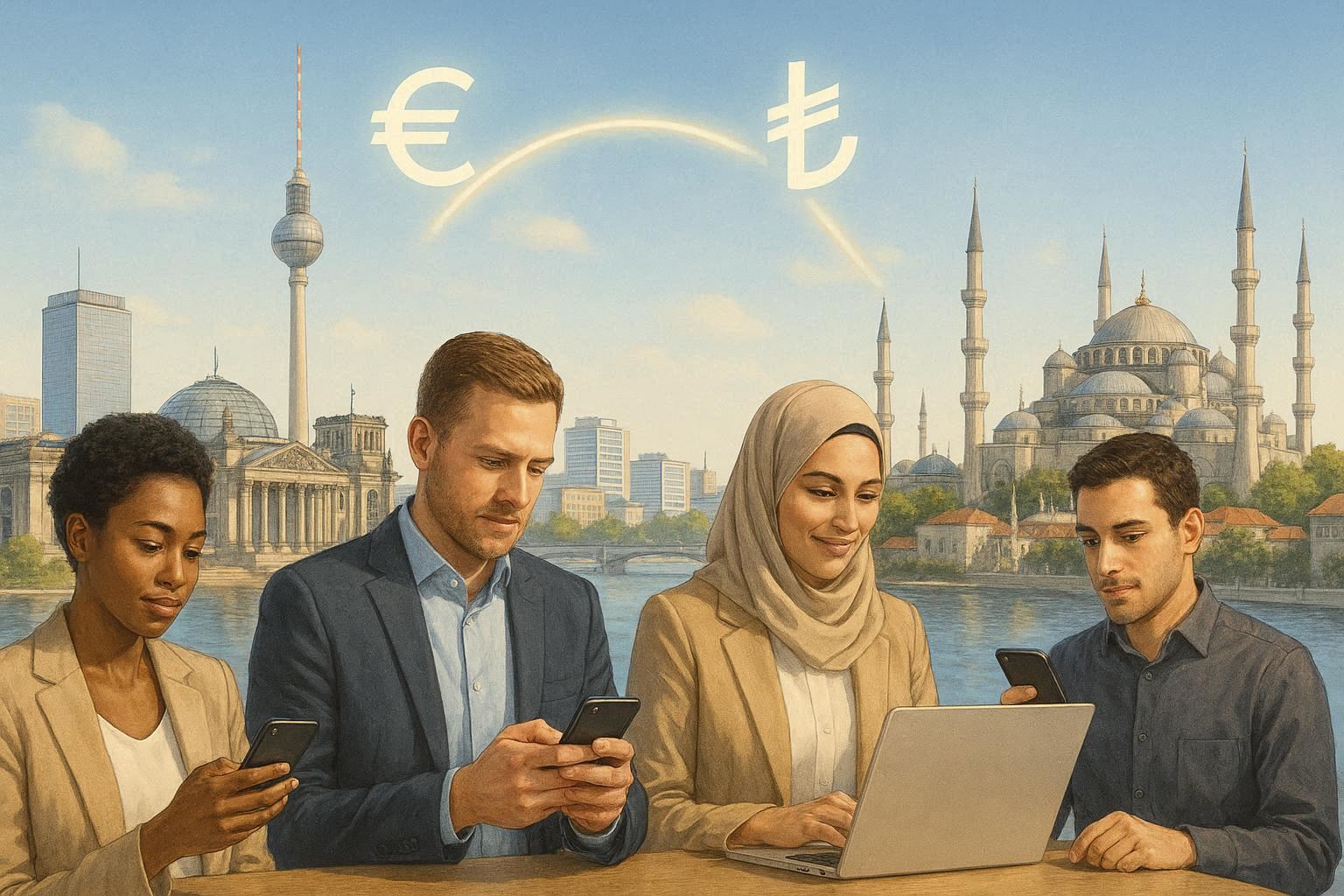
Understanding Cross-Border Money Transfers Between Germany and Turkey
Economics
Global mobility and economic interdependence have made cross-border money transfers an everyday necessity. Among the most active corridors for remittances in Europe is the one connecting Germany and Turkey—a route shaped by decades of migration, trade, and cultural exchange. For many, sending money from Germany to Turkey means supporting family, managing investments, or maintaining connections across borders. Understanding how this process works helps individuals make informed choices about speed, cost, and convenience.
The Historical and Economic Context
The flow of money between Germany and Turkey is rooted in the historical migration of Turkish workers to Germany starting in the 1960s. What began as a temporary labor movement evolved into a vibrant, multi-generational community that now plays an essential role in Germany’s economy and cultural life. Today, this diaspora maintains close ties with relatives and businesses in Turkey, resulting in a steady demand for reliable transfer options.
According to World Bank data, remittances sent from Germany to Turkey amount to hundreds of millions of euros annually. These funds often contribute to education, healthcare, housing, and small business activities—forming a lifeline for many households. Beyond personal transfers, cross-border payments also support bilateral trade and tourism, illustrating how financial flows sustain everyday life and economic growth on both sides.
How Money Transfers Work
International transfers can follow several routes. Traditional bank transfers use the SWIFT network, connecting financial institutions globally. While secure, this method can involve multiple intermediary banks, leading to delays and additional fees. Alternatively, specialized money transfer services and digital platforms have emerged to simplify and accelerate the process.
These modern systems often rely on real-time payment networks, currency conversion automation, and mobile interfaces, allowing users to send funds within minutes. In most cases, senders can transfer directly from their bank account, debit card, or mobile wallet to a recipient’s account or cash pickup point in Turkey.
The key factors influencing a sender’s decision include:
- Exchange rates: Even small differences in currency conversion rates can significantly affect the final amount received.
- Transfer fees: Some services offer low or zero upfront fees but compensate with higher exchange margins.
- Transfer time: Depending on the method and the recipient’s bank, delivery can range from seconds to several business days.
- Security and compliance: Licensed providers adhere to anti-money laundering (AML) and know-your-customer (KYC) regulations to ensure transactions remain transparent and secure.
Each option carries trade-offs, and what suits one sender may not fit another. Those sending funds regularly often prefer digital services that provide transparent costs and predictable transfer times.
To explore such modern digital transfer solutions, you can visit
https://koronapay.com/transfers/europe/en/landing/de-tr/
The Impact of Technology and Regulation
The European payments landscape continues to evolve under regulatory frameworks like PSD2 (Payment Services Directive 2), which promotes innovation and consumer protection. Open banking, for instance, has enabled non-bank providers to integrate with traditional financial systems, increasing competition and reducing transfer costs.
Meanwhile, advances in fintech infrastructure—such as blockchain technology and instant settlement systems—promise even faster and cheaper cross-border transfers. Although adoption remains gradual, these innovations are reshaping how people move money internationally.
Looking Ahead
As both Germany and Turkey deepen their economic and social ties, the need for efficient and affordable remittance channels will persist. For senders and recipients alike, the goal remains simple: transferring money safely, swiftly, and at fair value. The growing ecosystem of digital platforms ensures that this is increasingly within reach, reflecting a global shift toward more accessible and transparent financial services.